Is Alabama a No-Fault State?
No, Alabama is not a state that has a no-fault insurance system. Alabama is a fault state. Motorists who are found at fault for a collision may be held financially accountable for the medical bills and other losses they have caused others to sustain.
Every state has an auto insurance system that is either a “fault” or “no-fault” one. In most states, including Alabama, it is a “fault,” or tort system. In tort states, car accident victims must first turn to the liability insurance of the person who caused the accident in order to recover compensation. In no-fault states, drivers must first file a claim with their own insurance company before they can bring a claim against another party.
Here, we discuss how auto insurance claims work in Alabama and Alabama auto accident laws. To discuss the specific facts of your car accident and the options which may be available to you, contact us today at Gartlan Injury Law for a free consultation. We will take the time to get to know you and understand your needs and goals.
Alabama’s Minimum Insurance Requirements
Every Alabama driver must carry auto insurance, including liability coverage to cover the cost of car accidents they cause. Accident victims generally turn to the at-fault driver’s insurance first when seeking compensation for medical bills, lost income, pain and suffering, and other losses after a crash.
Alabama car insurance minimums include at least:
- $25,000 in bodily injury liability per person
- $50,000 for all bodily injuries per accident
- $25,000 in property damage liability
Drivers can purchase higher limits for greater protection after an accident. Higher limits can help reduce their personal exposure if they are found liable for damages that exceed their policy limits in a car accident lawsuit.
While liability insurance is the only mandatory auto policy in Alabama, drivers can purchase additional types of insurance. Optional add-ons include:
- Medical Payments (MedPay) ‒ Provides no-fault coverage for reasonable medical and funeral expenses for you and your passengers after an accident. This does not affect Alabama’s status as an at-fault state. Rather, MedPay is optional coverage that can help pay certain expenses regardless of who caused the accident.
- Collision coverage ‒ Pays for damage to your vehicle from a collision with another vehicle or object.
- Comprehensive coverage ‒ Covers non-collision losses such as theft, fire, vandalism, severe weather, flooding, and broken glass.
- Rental reimbursement ‒ Pays toward a rental vehicle while your covered car is being repaired after a qualifying loss.
- Towing and labor ‒ Covers towing and certain roadside labor expenses up to your policy limits.
What To Do If the Other Driver Has No Insurance
The Insurance Information Institute reports that nearly 17 percent of Alabama drivers were uninsured in 2023, making the state 15th worst in the nation for uninsured motorists. For people injured in auto accidents, that can make recovering full compensation more complicated. Don’t panic if an uninsured driver hits you, though, as you may still have options.
Uninsured motorist (UM) coverage is an optional provision within your own auto insurance policy that can step in to replace an at-fault driver’s missing liability insurance. Unlike some jurisdictions, Alabama does not require all motorists to purchase UM coverage. However, Ala. Code § 32-7-23 requires insurance companies to include it in any policy they sell unless a driver rejects it in writing.
Unless you opted out of UM insurance when you purchased your policy, you should have UM coverage. You can file an uninsured motorist claim against your own policy and recover compensation, up to your policy limits, the way you would have if you had filed a claim against the at-fault driver.
Don’t have UM insurance? You may still be able to pursue compensation. Contact our Alabama car accident lawyers for help understanding your options.
Responsibilities for Reporting the Accident
Ala. Code § 32-10-2 requires any driver involved in an accident that results in injury, death, or property damage to stop at the scene and not leave until they have:
- Provided their contact information and vehicle registration number to the other driver or drivers
- Shown their driver’s license to other involved parties if asked to do so
- Rendered reasonable assistance to anyone injured in the accident, including by transporting them to medical assistance if necessary
Drivers involved in accidents involving an injury or death also have a duty to notify law enforcement immediately under state law.
Steps to Take Immediately After the Accident
You can protect yourself in the immediate aftermath of a car accident in Alabama by:
- Reporting the crash to authorities
- Remaining at the accident scene
- Taking photographs of visible injuries, vehicle positions, vehicle damage, and the surrounding conditions
- Exchanging contact and insurance information with the other driver(s)
- Getting the names and phone numbers for any witnesses
- Cooperating with police investigators
- Seeking medical attention as soon as possible
- Notify your insurance company of the crash, providing basic details such as the date, time, and location
- Avoid giving the other driver’s insurer a recorded statement or accepting a settlement before seeking legal advice
Finally, contact Gartlan Injury Law and arrange a free consultation with a car accident lawyer in Alabama.
What Is the Difference Between Fault and No-Fault States?
As its name suggests, no-fault insurance means that accident victims do not have to prove fault after a car crash in order to recover compensation. Typically, this compensation comes from personal injury protection (PIP) insurance which covers up to a certain amount in medical expenses, lost income, and other economic losses. Most states that follow a no-fault insurance system allow drivers to file a lawsuit against a negligent driver only if they have incurred a certain amount of damages, or if they have sustained catastrophic injuries.
In a fault-based system such as the one in Alabama, accident victims must prove that another driver was to blame for the accident that caused their injuries. Accident victims must file a claim with the negligent driver’s insurance company. Bodily injury liability insurance provides compensation for the victim’s personal injury, while property damage liability insurance covers any damage to the accident victim’s vehicle and other personal property that was damaged during the crash.
How Do Auto Insurance Claims Work in Alabama?
After a crash, one of the first steps you should take is to file a claim with the at-fault driver’s insurance company. The insurance company is then required to provide compensation for medical expenses, lost income, pain and suffering, emotional distress, and other damages. Receiving this compensation is not always easy. Insurance companies are known for challenging accident victims’ claims and for trying to pay as low of a settlement as possible.
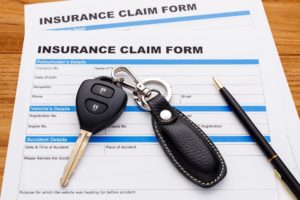 However, if the negligent driver does not have auto insurance, or the accident was a hit-and-run, you may be able to file an uninsured motorist (UM) claim with your own insurance company. You can also file a claim with your own insurer if the negligent driver’s auto insurance fails to provide enough compensation to fully cover the cost of your injuries. This is done through underinsured motorist (UIM) bodily insurance coverage.
UM/UIM insurance coverage is not required in Alabama. If you do not want UM/UIM, you must notify the insurer in writing that you do not want it included in your policy. Although UM/UIM coverage may make insurance premiums a bit more expensive, it is advised that all drivers purchase this insurance. After an accident, it may be the only way you can claim compensation for your injuries.
All insurance claims in Alabama are governed by a statute of limitations. This is the amount of time you have to file a claim with either your own insurance company or the at-fault driver’s insurer. The statute of limitations in Alabama is two years from the date of the accident. If you file a claim after the statute of limitations has expired, you will likely be barred from receiving any compensation.
How Do You Prove Fault in a Car Accident Claim?
Because Alabama is an at-fault auto insurance state, you must prove that another driver acted negligently and that the driver’s negligence caused your accident. Drivers can act negligently in many different ways, including:
- Drunk driving
- Texting and driving
- Other forms of distracted driving such as eating or changing the radio
- Drowsy driving
- Reckless driving
- Failing to follow traffic signs and signals
- Speeding
It’s not enough to simply tell the insurance company that another motorist was driving negligently. You must provide evidence that supports your claim, and shows that another driver was at fault for your crash. This is why you should seek help from an attorney. For instance, at Gartlan Injury Law, our injury lawyers can track down evidence such as:
- Photos of the accident scene
- Police report
- Statements from eyewitnesses
- Testimony from experts, including accident reconstruction specialists and medical professionals
- Medical bills to prove the extent of your injuries
- Pay stubs to prove lost income
- Receipts of other damages, including repairs made to your vehicle.
The more evidence you have to back up your claim, the better your chance of recovering maximum compensation for your damages.
Can Not Wearing a Seat Belt Make Me Partly at Fault?
Ala. Code § 32-5B-4 requires Alabama motorists to wear seat belts. If you weren’t wearing a safety belt at the time of an accident, the at-fault driver’s insurer might argue that your failure to wear one worsened your injuries. However, Ala. Code § 32-5B-7 also explicitly states that a seat-belt violation is not evidence of contributory negligence, nor does it reduce an insurer’s liability. Don’t let the insurance company bully you into accepting less than you deserve. Instead, contact a lawyer immediately if the insurer tries to reduce your compensation because you weren’t wearing a seat belt.
What is the Deadline for Filing Your Car Accident Claim?
Ala. Code § 6-2-38 generally gives you two years from the date of a car accident to file a personal injury lawsuit against the party that injured you. Certain circumstances can extend this deadline, such as if the at-fault person leaves the state and can’t be located. Others can shorten it. For example, under Ala. Code § 11-47-23, victims have only six months to file a claim against a municipality if it or one of its employees is liable for a crash.
If you miss the applicable deadline, the court can dismiss your case as untimely, potentially preventing you from recovering compensation. Protect your right to pursue a claim by contacting an experienced attorney to learn which statute of limitations applies to your car accident case.
What Happens If You Share Fault in a Car Accident?
When assessing a car accident claim, insurance companies and the at-fault party will likely try to assign a portion of the blame to the accident victim. This is due to Alabama’s contributory negligence rule.
 Most other states follow some form of modified contributory negligence. Some states allow accident victims to recover compensation if they are less than 49 percent to blame, while others allow victims to claim damages if they are less than 51 percent. Unlike those other states, Alabama follows a pure contributory negligence rule. Under this rule, an accident victim can be barred from recovering any compensation if he or she is even one percent at fault for a crash.
Many insurance companies and at-fault parties will use this rule to avoid paying any compensation. This is why it is so crucial that accident victims speak to an experienced car accident lawyer such as Aaron Gartlan as they move forward with their case.
Get Help from an Alabama Car Accident Lawyer
If you have been in a car accident and need compensation for your injuries, you will have a lot on the line. You should not try to file a claim on your own. At Gartlan Injury Law, we will conduct a thorough investigation to collect evidence from your crash and support your claim. We will also deal with the insurance company, ensure your claim is filed properly and on time and give you the best chance of a positive outcome. Contact us today to learn more about how we can help you in a free consultation.
Need Help? Contact Us