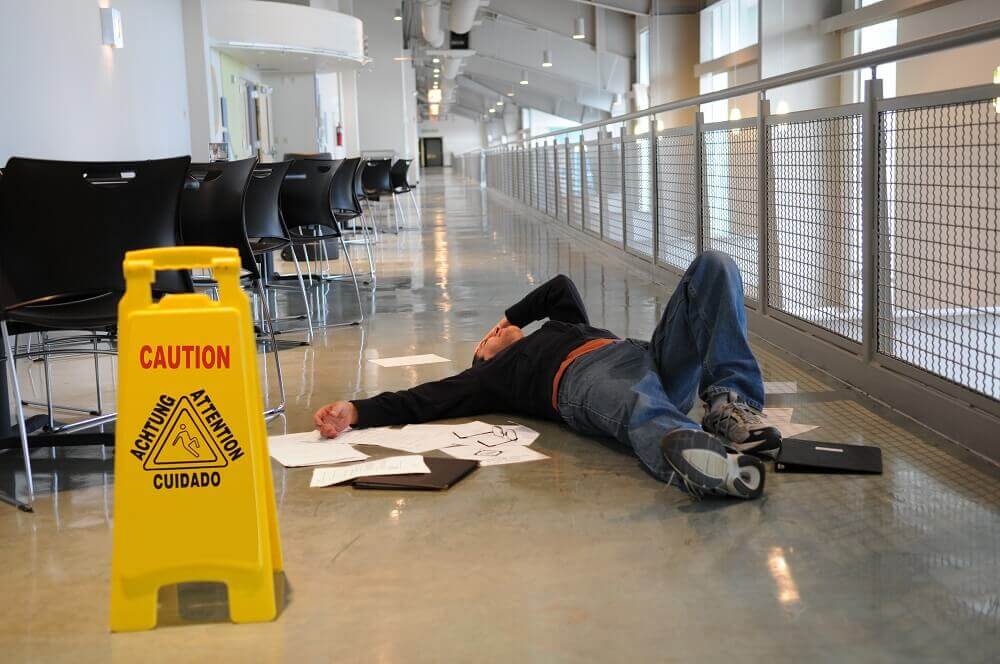
Did you fall and get hurt while on someone else’s property in Alabama? If so, that person could owe you compensation for your medical expenses, lost wages, and related damages — provided you can show they failed to address a hazardous condition. To prove your case, you’ll need compelling evidence such as surveillance footage, eyewitness testimony, maintenance records, and photos of the scene.
An experienced Alabama slip-and-fall lawyer at Gartlan Injury Law can help you preserve, gather, and review this evidence and use it to establish whether the at-fault party knew (or should have known) about the hazard yet failed to address it promptly.
What Facts Do You Have to Prove in a Slip-and-Fall Case?
To prove a slip-and-fall claim in Alabama, you must establish the following elements:
- You were legally on someone else’s property.
- That person failed to address a hazard on their property.
- You slipped and fell as a result of that dangerous condition.
- You suffered an injury as a result.
Alabama law classifies people who visit a property as invitees, licensees, and trespassers. Landowners owe a different duty of care to each person based on their status.
Here’s how it works:
- Invitees – People patronizing a business or who are on property open to the general public. Property owners and occupiers must exercise reasonable care to maintain safe premises through regular inspections, prompt repairs, and clear warnings. Property owners owe invitees the highest duty of care.
- Licensees – Social guests and, in some cases, sales or tradespeople. Owners and occupiers need only warn licensees of known hazards that they would be unlikely to discover on their own.
- Trespassers – Individuals who enter property without permission (Ala. Code § 6-5-345). Property owners owe the lowest duty of care to trespassers and generally must refrain from intentionally or wantonly causing injury. Additional duties may arise in certain circumstances under Alabama law.
Who Has the Burden of Proof in an Alabama Slip and Fall Claim?
As the person bringing the slip-and-fall claim, the burden of proof in the case lies with you. The property’s owner or occupier doesn’t have to prove that they are not responsible for your injuries. However, the standard of proof in a premises liability claim is by a preponderance of the evidence, which is a lower bar to clear than the standard of beyond a reasonable doubt that applies in criminal cases.
In simple terms, a preponderance of the evidence means that you must show that it is more likely than not that the property’s owner or occupier created the hazard on their premises and knew or should have known about it, and that the dangerous condition led to your slip and fall.
What Are Common Causes of Slip-and-Fall Accidents in Alabama?
Leading causes of slip-and-fall accidents in Alabama include:
- Wet floors
- Uneven flooring or loose floorboards
- Negligent property maintenance
- Broken steps
- Uneven surfaces
- Inadequate lighting
- Unsafe staircases
- Cluttered walkways
- Broken handrails
- Failure to post warning signs
What Types of Evidence Do You Need to Support an Alabama Slip-and-Fall Claim?
You’ll need strong evidence to prove that you’re entitled to compensation after a slip and fall. Common types of evidence that may be used to prove an Alabama slip-and-fall case include:
- Incident reports – These reports serve as an official record of the accident. They make it harder for the at-fault party to deny that they were aware of your injury or claim that it happened some other way.
- Photographic evidence – Photographs preserve the conditions that caused the accident before repairs or cleanup can occur. They can visually demonstrate hazards such as a wet floor, broken pavement, poor lighting, or missing warning signs in ways that written descriptions cannot.
- Video evidence – If available, surveillance or security camera footage is particularly compelling as it offers an objective account of how the accident happened.
- Witness statements – Eyewitnesses can testify that they saw the dangerous condition or the events leading up to the accident.
- Maintenance records – Internal documentation might reveal a pattern of neglect, missed inspections, or delayed repairs. It might also prove that the property owner knew about the dangerous condition but failed to fix it.
- Medical records – Your medical records can directly connect your injuries to the slip-and-fall accident. They can also address the severity of your injuries and the medical treatment that you received or continue to receive.
- Evidence of financial losses – Financial records speak to the economic impact the accident has had on your life. Medical bills, prescription receipts, pay stubs, or tax returns may be used to support a claim for lost wages and out-of-pocket expenses related to the accident.
What Steps Should You Take After a Slip-And-Fall Accident?
Here’s what you can do to protect your rights and ability to pursue fair compensation after a slip-and-fall accident in Alabama:
- Document the scene with photos and videos.
- Report the accident to the owner or manager of the property. Keep a copy of the incident report.
- Get the names and contact details of anyone who saw the accident.
- Seek medical attention promptly.
- Write down what happened while your memory is fresh.
- Contact an Alabama slip-and-fall lawyer as soon as possible.
What Compensation Can You Recover in an Alabama Slip and Fall Accident Case?
In Alabama, an accident victim can generally seek two different types of compensation in a slip-and-fall injury claim:
- Economic compensation – Financial losses that can be calculated, such as medical bills, lost income, costs of medical equipment, and out-of-pocket expenses
- Non-economic compensation – Subjective personal costs like pain and suffering and emotional distress
Does Alabama Have a Time Limit for Filing a Slip-and-Fall Accident Lawsuit?
You do not have unlimited time after a slip and fall to take legal action. Ala. Code § 6-2-38 gives you two years from the date of the accident to sue the at-fault property owner. If you attempt to file after this deadline has passed, you are likely barred from pursuing your claim in court.
Contact an Alabama Slip-and-Fall Accident Lawyer
If you slipped and fell on someone else’s property in Alabama, contact Gartlan Injury Law right away.
Here’s what our firm offers injured people in Dothan and throughout the state:
- People-first legal representation – We genuinely care about you and your well-being. We’ll take the time to listen to your story and understand your concerns so we can better advocate on your behalf.
- Attention to detail – We leave no stone unturned as we gather evidence to support your claim, including expert testimony as needed.
- Accessibility – We’re available 24/7 to take your calls and get updates on the status of your case.
- No fees unless we win – Our lawyers work on a contingency fee basis, which means you pay no upfront costs and we only collect attorney fees if we recover compensation for you.
Our commitment to excellence has helped us achieve meaningful case results for Alabama accident victims, both at the settlement table and at trial. Past results do not guarantee similar outcomes.
Here’s what one former client had to say about working with Gartlan Injury Law:
“Mr. Gartlan recently handled an injury case for me and did an excellent job. He and his assistant, Candice, always kept me informed of what was going on every step of the way. I highly recommend Mr. Gartlan and his team if you need legal help with an injury claim.”
– Diane
If you suffered injuries due to a property owner’s negligence, don’t wait to get the legal advocacy you need. Contact Gartlan Injury Law today for a free case review.